Table Of Content

The vision of the project was to show that the country has moved on from the British rule. For that, Sharon “tropicalized and contextualized” Bauhaus, giving the Modernist movement a sense of Africa by integrating ethnic designs within the buildings’ facades and structures. The buildings were designed as upside-down pyramids, providing shade and protection from the sun and rain, and maximized the natural air-flow within the spaces.
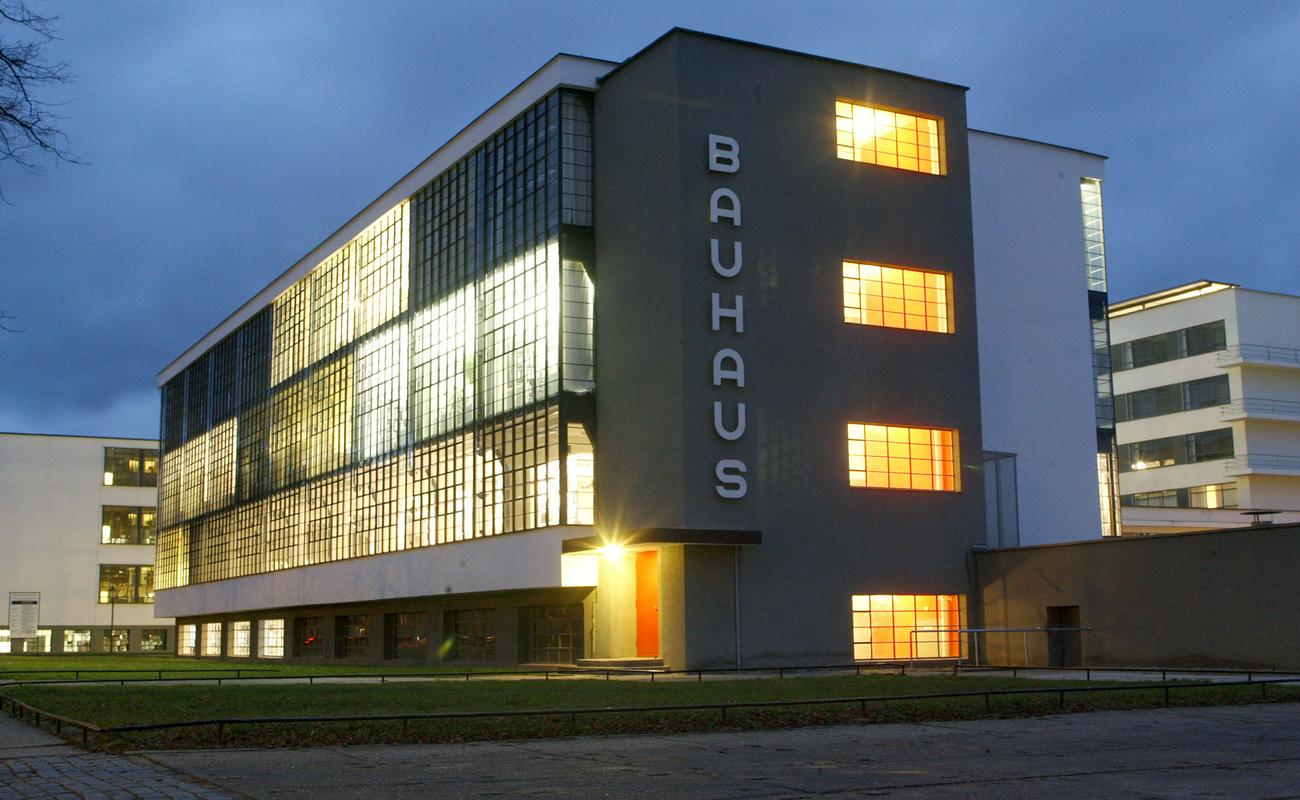
Bauhaus building in Dessau, Germany
8 Iconic Bauhaus Sites to Visit for Its 100th Anniversary - Artsy
8 Iconic Bauhaus Sites to Visit for Its 100th Anniversary.
Posted: Fri, 01 Mar 2019 08:00:00 GMT [source]
Isokon Buildings, Walter Gropius1934London, United KingdomBefore moving to America, Gropius designed his English “exile” home with the same styles and techniques he had used in his projects and teachings. Isokon, which is the contraction of Gropius’ design company “Isometric Unit Construction”, was then joined by Marcel Breuer and Laszlo Moholy-Nagy, both of whom had had an input in the firm’s graphic and furniture designs. On the left, Barcelona chairs designed by Ludwig Mies van der Rohe, an architect who served as the third and final director of the Bauhaus school. Although the USA was the best-known refuge for the Bauhaus members, it was by no means the only one. Architect Lotte Beese, for instance, moved to Amsterdam with her husband Mart Stam in 1935, and was highly instrumental in rebuilding Rotterdam after the Second World War.
What Is Bauhaus Architecture?
He initially trained as an architect, and in the late 1910s was part of the Darmstadt Artist's Colony, falling under the influence of that group's Jugendstil or Art Nouveau principles, as well as its emphasis on the idea of the 'total work of art'. However, in 1920 Bayer became intrigued by Gropius's new endeavor, and in 1921 enrolled at the school, studying under Kandinsky, Klee, and Moholy-Nagy. Returning as a teacher in 1925, he was named the Bauhaus's director of advertising and printing during the Dessau phase. He developed the Universal Bayer typeface after Gropius commissioned him to create a typeface which could be used in all Bauhaus publications. At this time, German printers still generally favored Fraktur, a dramatic Gothic typeface designed in the 16th century for Albrecht Dürer's Triumphal Arch (1526) woodcut. By stripping out the ornamentation of German script, Bayer expressed the spirit of a new cultural movement that rejected backwards-looking nationalism and embraced cosmopolitan modernity, a movement spearheaded by the Bauhaus, and later snuffed out by the Nazis.
of the Best Bauhaus Buildings in Germany
Such materials were seen as unconventional for use in furniture making at the time, but facilitated mass production and promoted the Bauhaus' spirit of practicality. Stripped down to their basic elements, fundamental components like tabletops or legs were typically reduced to simple geometric forms. "I think the natural progression of the Bahaus movement is the adoption of 'modern' and 'minimalism' to all styles of interior design," says Hyman, using modern farmhouse and Japandi as two common examples. "It’s interesting to see older and more classical or traditional interior design styles being re-invented through a Bauhaus lens and stripped of their ornamentation," says Hyman. "Modern Rococo? Sure, why not?Minimal maximalism? Let’s give it a try! Take that bold color palette and soften it with some gray or make it moody with some black and you have a 21st-century sensibility." Some of the most iconic chairs and other pieces of furniture emerged from the Bauhaus school.
The Bauhaus: its influence on hospital design and wine labels Bone Marrow Transplantation - Nature.com
The Bauhaus: its influence on hospital design and wine labels Bone Marrow Transplantation.
Posted: Wed, 12 Jun 2019 07:00:00 GMT [source]
But Gropius and other prominent Bauhaus designers left Germany and spread its ideas from Western Europe to the U.S. and Canada to Israel, turning it into arguably the most influential arts and design school in the history of the world. Bauhaus, school of design, architecture, and applied arts that existed in Germany from 1919 to 1933. By training students equally in art and in technically expert craftsmanship, the Bauhaus sought to end the schism between the two. Known for developing a distinctive, modern style built on the principle of simplicity, teachers and students from the Bauhaus school designed some of the 20th century's most iconic pieces of furniture. Obafemi Awolowo University, Arieh SharonEarly 1960’sIle-Ife, NigeriaThe Israeli architect believed that his most “decisive challenge” took place in Nigeria when he was chosen by a local government and architecture firm to build a new university in the city of Ife.
Simplicity, functionality, geometric shapes, and new materials such as steel, glass, and concrete characterize Bauhaus architecture. Various artistic and cultural movements, such as the Arts and Crafts, De Stijl, and Constructivism, influenced Bauhaus architecture. The Bauhaus school attracted many influential teachers and students, such as Ludwig Mies van der Rohe, Marcel Breuer, Marianne Brandt, and Paul Klee. The Bauhaus style spread across the world as many of its members emigrated to escape the Nazi regime, which closed the school in 1933. Firstly, Bauhaus architects use clean lines and geometric shapes to create a sense of order and clarity in their buildings. They avoid unnecessary ornamentation and decoration and focus on the essential elements of the structure and the space.
What movements have been influenced by or have influenced Bauhaus architecture?
Realizing that machine production had to be the precondition of design if that effort was to have any impact in the 20th century, Gropius directed the school’s design efforts toward mass manufacture. On the example of Gropius’s ideal, modern designers have since thought in terms of producing functional and aesthetically pleasing objects for mass society rather than individual items for a wealthy elite. “The Bauhaus founders wanted to create better buildings that harnessed the newest building methods and technologies,” says Kerl. The results included purposefully designed architecture, furniture, and interior objects, as well as typography, arts, and graphic art. Its workshop products were widely reproduced, and widespread acceptance of functional, unornamented designs for objects of daily use owes much to Bauhaus precept and example. Bauhaus teaching methods and ideals were transmitted throughout the world by faculty and students.
They often employ materials such as steel, glass, and concrete and prioritize the efficient use of space. The two middle rings represented two intermediary three-year courses, the formlehre, which focused on problems related to form, and the werklehre, a programme of practical, workshop-based instruction oriented around technical crafts and skills. These classes emphasized functionalism, in particular the use of simple geometric forms that could be reproduced with ease, a conceptual lynchpin of modernist architecture and design across the decades to come. At the center of the wheel were courses specializing in building construction, teaching students the essentials of architectural design, engineering and construction, though with an emphasis on personal craft and workmanship that was felt to have been lost in modern building processes. A key aim of the pedagogical approach, one which applied across all courses, was to eliminate competitive tendencies, to foster not only individual creativity but also a sense of community and shared purpose. Herbert Bayer's Universal Bayer typeface, a classic of International Style typography, employs a minimal geometric design of the sans-serif type favored by the Bauhaus.
Marcel Breuer's Wassily Chair
Bauhaus architecture reflected the cultural and social values of the time when it was popular in 4 ways. Firstly, Bauhaus architecture was a response to the devastation and disillusionment caused by World War I. It aimed to create a new, rational, and functional style of building that would help rebuild society and promote social harmony. Bauhaus architects rejected the ornamental and historical styles of the past and embraced the principles of industrialization, standardization, and mass production. They used modern materials such as steel, glass, and concrete to create simple, geometric, and modular forms that expressed the spirit of the new era.
The school is also renowned for its extraordinary faculty, who subsequently led the development of modern art - and modern thought - throughout Europe and the United States. The movement encouraged teachers and students to pursue their crafts together in design studios and workshops. The school moved to Dessau in 1925 and then to Berlin in 1932, after which Bauhaus—under constant harassment by the Nazis—finally closed. The Bauhaus movement championed a geometric, abstract style featuring little sentiment or emotion and no historical nods, and its aesthetic continues to influence architects, designers and artists. Bauhaus buildings used modern and industrial materials in the early 20th century, such as glass, steel, concrete, cellophane, and plywood.
Bauhaus, Walter Gropius1926Dessau, GermanyAfter continuous political resentment in Weimar, the school was forced to relocate, settling in Dessau. Instead of being afflicted by the move, Bauhaus experienced its prime days at the German city, becoming labeled as an international design school. Gropius took the opportunity to build a school with a more futuristic approach than the original campus, bringing about new designs and programs for the masses, and inaugurating some of the most notable architects to date.
The lamp is made from precisely cut glass and metal with an opaque lamp shade – a type formerly used only for industrial lighting. Bauhaus designers wanted to create aesthetically pleasing objects, but also wanted their products to be available to a mass public – the simple designs of each furniture piece made it easier to produce them efficiently. Like the practical use of color mentioned above, functional design is the hallmark of Bauhaus. “Targeted use of primary colors accentuated a building’s form or function,” says Kerl, noting that these primary colors were often used to convey information.



No comments:
Post a Comment